7010 W Loop 1604 N, Suite 205, San Antonio, Texas 78254



Why Waiting Too Long for a Dental Implant Can Cost You More Than You Think
Book Online

The Hidden Price of ‘I’ll Deal With It Later’
You’ve probably told yourself the same thing a hundred other San Antonio patients have: “I’ll get that tooth replaced when things settle down.” Maybe it’s finances. Maybe it’s fear. Maybe life just got busy. Whatever the reason, that empty space in your mouth is doing more damage with every month that passes and most people don’t realize it until they’re staring at a much bigger problem and a much bigger bill.
Here’s what the internet doesn’t tell you: delaying dental implant treatment isn’t just inconvenient. It triggers a chain reaction one that affects your jawbone, your surrounding teeth, your bite, and ultimately your wallet. This blog breaks down exactly what’s happening, and why San Antonio patients who act quickly almost always come out ahead.
What Actually Happens When a Tooth Goes Missing
Your Jaw Bone Starts Shrinking Immediately
This is the part most people don’t hear until it’s too late. Your tooth roots were doing a job you never thought about: they were stimulating the jawbone every time you chewed, talked, or bit down. The moment that root disappears, the bone beneath it gets no more stimulation. The body reads that as a signal —
“This bone isn’t needed anymore.” And it begins to resorb, or dissolve itself.
Studies show that up to 25% of jawbone width can be lost within the first year after tooth loss. After three years, the numbers get harder to ignore. By the time some patients come in for a consultation, bone grafting becomes necessary adding cost, time, and recovery to a procedure that would have been straightforward earlier.
Neighboring Teeth Begin to Drift
Teeth aren’t designed to stand alone. They rely on each other for structural support. When one goes missing, the adjacent teeth start to lean and shift toward the open space. Over time, this misalignment creates bite problems, uneven wear on the enamel, and new vulnerabilities for tooth decay and gum disease in the gaps that form.
What started as one missing tooth now becomes a bite alignment issue, sometimes requiring orthodontic correction on top of the implant itself.
Facial Structure and Appearance Change
Here’s the part that surprises people the most. That sunken look in the cheek or jaw that some patients develop? It’s not just aging. It’s bone loss. As the jaw shrinks, the face loses support from the inside and the change can be noticeable within a few years. Dental implant treatment isn’t just about replacing a tooth; it preserves the bone structure that keeps your face looking like you.
DID YOU KNOW?
The jawbone begins losing density within as little as 3–6 months after a tooth is extracted. The longer you wait, the more complex and expensive the solution becomes. Acting within the first year almost always means a simpler, faster procedure with fewer complications.
Acting Now vs. Waiting: A Real Cost Comparison
This comparison reflects what patients across San Antonio and the broader dental community commonly experience. Individual cases vary, but the pattern is consistent:
| Scenario | Treatment Needed | Relative Cost | Recovery Time |
| Implant placed within 6–12 months of extraction | Single tooth implant | Lower | Standard |
| Waited 1–2 years, moderate bone loss | Implant + minor bone graft | Moderate increase | Extended |
| Waited 3+ years, significant bone resorption | Implant + major bone graft + possible sinus lift | Significantly higher | Much longer |
| Multiple teeth drifted, bite affected | Implant + orthodontic correction | Highest | Months longer |
The Real Risks of Delayed Tooth Replacement
Oral Health Doesn’t Stand Still
An untreated gap in your smile is not a stable situation. Food gets trapped, bacteria accumulate, and gum disease can develop in spaces that are difficult to clean. That puts the neighboring teeth at risk and gum disease, once established, is a chronic condition that affects your overall oral health for life.
Restorative Options Narrow Over Time
The sooner a dental implant consultation happens, the more options are on the table. Patients with healthy bone have the most straightforward path to a single tooth implant. Wait too long, and some may need to explore tooth replacement options like bridges or partial dentures solutions that can work well but don’t address the underlying bone loss the way implants do.
The Financial Impact Compounds
Bone grafts, extended procedures, and additional consultations add real cost. A procedure that’s relatively contained today can multiply in complexity if deferred by even a year or two. Most patients who come in after waiting report that they wish they hadn’t put it off, not because the implant itself scared them, but because they didn’t realize the gap was creating larger problems underneath.
If you’re still unsure whether replacing a missing tooth can wait, it’s worth understanding what happens beyond the visible gap. From jawbone deterioration to shifting teeth and bite problems, the effects can spread throughout your smile over time. Read What Happens If You Don’t Replace a Missing Tooth? Hidden Risks San Antonio Patients Shouldn’t Ignore to learn why early treatment often leads to simpler, more affordable care.
⭐⭐⭐⭐⭐ Patient Experience
I had a great experience at Z Dentist. The staff was amazing, welcoming, and very informative throughout my visit. They took the time to explain everything clearly and made sure I felt comfortable. Their professionalism and friendly attitude made the entire experience smooth and stress-free. I highly recommend Z Dentist to anyone looking for great dental care and excellent customer service. — Luis Cordova | Google Review
Read more Google Reviews from our patients to see why so many San Antonio families trust Z Dentist for compassionate, high-quality dental care.
What the Dental Implant Procedure Actually Involves
It’s More Straightforward Than Most People Imagine
A lot of the hesitation around dental implant treatment comes from not knowing what to expect. Here’s the honest version: it’s a staged process, and each stage is far more manageable than most patients anticipate.
Step 1: Consultation and imaging – Your dentist reviews bone density and maps out your treatment plan. This is where you learn exactly what’s involved in your specific case.
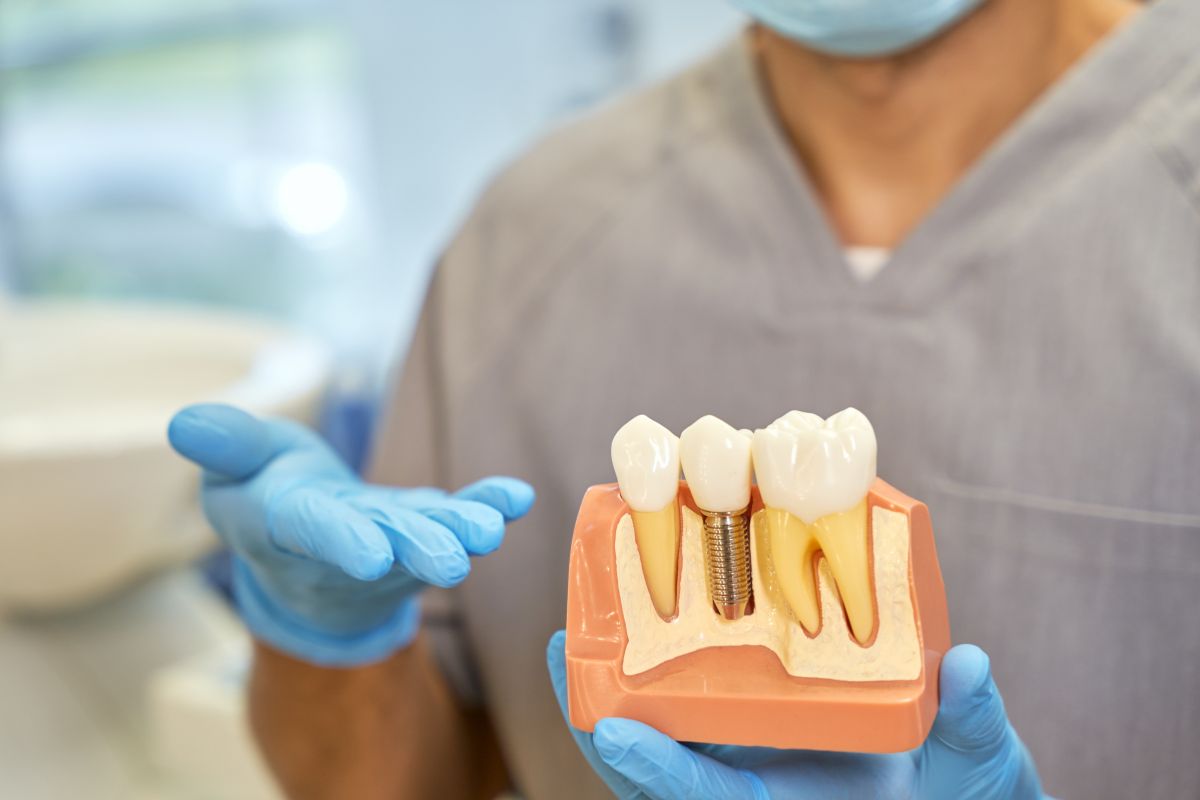
Step 2: Implant placement – A small titanium post is placed into the jawbone. Most patients are surprised by how comfortable the process is with modern anesthesia.
Step 3: Healing and osseointegration – The implant fuses naturally with the bone over a few months. This is what makes the implant so durable long-term.
Step 4: Crown placement – A custom crown is attached to match your natural teeth in color, shape, and feel.
The result is a tooth replacement that looks, feels, and functions like a natural tooth and protects the jawbone from further loss. No other missing tooth replacement option does that as effectively.
Getting the implant is only the beginning. Long-term success also depends on how well you care for it every day. Many patients are surprised to learn that one common daily habit can slowly affect the health and longevity of their implant without causing obvious symptoms at first. Learn how to protect your investment in our guide, The One Habit That Slowly Damages Dental Implants Without You Realizing.
Meet Your Dentist at Z Dentist
Dr. Z and Dr. Mo believe every patient deserves honest guidance and personalized care when considering dental implants. During your consultation, they take the time to evaluate your oral health, explain how missing teeth may affect your jawbone and overall smile, and discuss all of your treatment options in clear, easy-to-understand terms. Whether you’re replacing a single missing tooth or exploring more comprehensive restorative care, their goal is to help you make a confident, informed decision, without pressure and at a pace that feels right for you.

Your Bone Is Changing Right Now – Don’t Wait Another Month
The sooner you start, the simpler and less costly your dental implant treatment will be. Schedule a no-pressure consultation at Z Dentist San Antonio today and find out exactly where you stand. Book Your Dental Implant Consultation Now!
Why San Antonio Patients Choose Z Dentist for Dental Implants
Local Care With a Real Commitment to Patient Education
San Antonio is a city that values honesty and community. At Z Dentist, that’s not a marketing line, it shapes every consultation. Patients from across the greater San Antonio area, including those coming from the surrounding neighborhoods and suburbs, consistently report feeling informed, not pressured, when exploring their tooth replacement options.
The clinic’s approach to restorative dentistry is built around what’s best for your long-term oral health, not the fastest path to a procedure. Whether you’re a candidate for a single tooth implant, multiple dental implants, or All-on-X Dental Implants to restore a full arch of missing teeth, your treatment plan is tailored to your individual needs. If additional procedures such as bone grafting are recommended before implant placement, Dr. Z and Dr. Mo explain every step clearly, answer your questions honestly, and help you understand all of your options before moving forward.
Restorative Dentistry That Protects More Than Your Smile
A missing tooth affects more than appearance. It affects how you eat, how you speak, how you carry yourself in conversation, and ultimately how your remaining teeth hold up over time. The dental implant procedure at Z Dentist is designed to address all of those factors not just the visible gap.
Signs You Should Book a Consultation Soon
If any of the following apply, don’t put the call off:
- You lost a tooth more than 3 months ago and haven’t had it replaced
- You notice a neighboring tooth feels looser or has shifted toward the gap
- You’ve been told you’re at risk for gum disease or have had it before
- You avoid certain foods or chew only on one side of your mouth
- You feel self-conscious about smiling in photos or in conversation
- A dentist previously recommended an implant but you never followed through
Every Month You Wait Is Costing You Bone — and Options
San Antonio patients who come in early leave with more choices, simpler procedures, and better long-term outcomes. The team at Z Dentist is ready to walk you through your options — with zero pressure and complete transparency. Call Us to Schedule Your Dental Implant Consultation at Z Dentist now!
Frequently Asked Questions
How long can I wait to get a dental implant after a tooth extraction?
Ideally, you should consult a dentist within three to six months of an extraction. While some patients wait longer, early consultation preserves more natural bone, reduces the likelihood of needing a bone graft, and gives you a simpler, less expensive treatment path. The sooner you act, the more options you have.
What happens to the jawbone when a tooth is missing?
The jawbone depends on tooth root stimulation to maintain its density. Without that stimulation, the bone begins to resorb it literally dissolves and shrinks. This process starts within months of tooth loss and continues over time. A dental implant is the only tooth replacement option that replicates root stimulation and stops this bone loss.
Is a dental implant the only option for a missing tooth?
No, dental bridges and removable partial dentures are also options. However, only dental implants address the underlying bone loss caused by a missing tooth. Bridges require grinding down neighboring healthy teeth, and dentures don’t stop jawbone resorption. For long-term oral health, implants are generally the most complete solution.
How much does waiting to get a dental implant cost in the long run?
The cost depends on how much bone loss occurs in the waiting period. Patients who act quickly may only need a straightforward implant procedure. Those who wait years often face additional costs for bone grafting, more complex surgical procedures, and potentially orthodontic treatment if teeth have shifted. Acting within the first year is almost always less expensive overall.
Does dental implant surgery hurt?
Most patients report that the dental implant procedure is much more comfortable than they expected. With local anesthesia, the placement itself is typically painless. Post-procedure soreness is common for a few days and well-managed with over-the-counter medication. Anxiety about the process is one of the most common reasons patients delay and one of the most avoidable.
Am I a good candidate for a dental implant?
Candidacy depends on overall oral health, jawbone density, and certain medical factors. Most healthy adults are candidates, especially if they act before significant bone loss occurs. A dental implant consultation will include imaging to evaluate your specific anatomy and health profile. The best way to find out is to have an evaluation not to assume you aren’t a candidate.
How long do dental implants last?
With proper care and maintenance, dental implants can last a lifetime. The titanium post integrates with the bone permanently. The crown may need replacement after 10–15 years depending on wear, but the implant itself is designed to be a permanent, stable foundation. No other tooth replacement option offers that kind of long-term durability.